Trends in interior design may come and go, but some colours never lose their charm. Pink is one of those enduring hues that manages to feel both timeless and modern at once. Whether used subtly or boldly, it has an uncanny ability to adapt to evolving tastes and styles. In particular, pink wallpaper offers a versatile way to bring personality and polish to any room without feeling too trendy or tired.
The Psychology Of Pink In Interiors
Colour psychology plays a big role in why pink remains such a staple in home décor. Traditionally associated with warmth, calmness and comfort, it has a soothing quality that makes spaces feel welcoming. Soft blush tones create a sense of tranquility in bedrooms and living rooms, while brighter shades bring playful energy to kitchens or hallways. Pink also reflects light beautifully, helping smaller or darker rooms appear more spacious and vibrant.
Versatility Across Styles
Few colours blend as seamlessly across design eras as pink. In classic interiors, dusty or rose shades pair elegantly with antique brass fixtures and rich wooden furniture. For contemporary schemes, blush and nude tones complement minimalist lines and natural materials like linen, marble or rattan. Even in industrial or modern homes, adding pink through wallpaper, textiles or artwork offers a balance to metal and concrete textures. This flexibility allows pink to evolve continually with design trends rather than being confined to any single look.
Creating Depth And Dimension
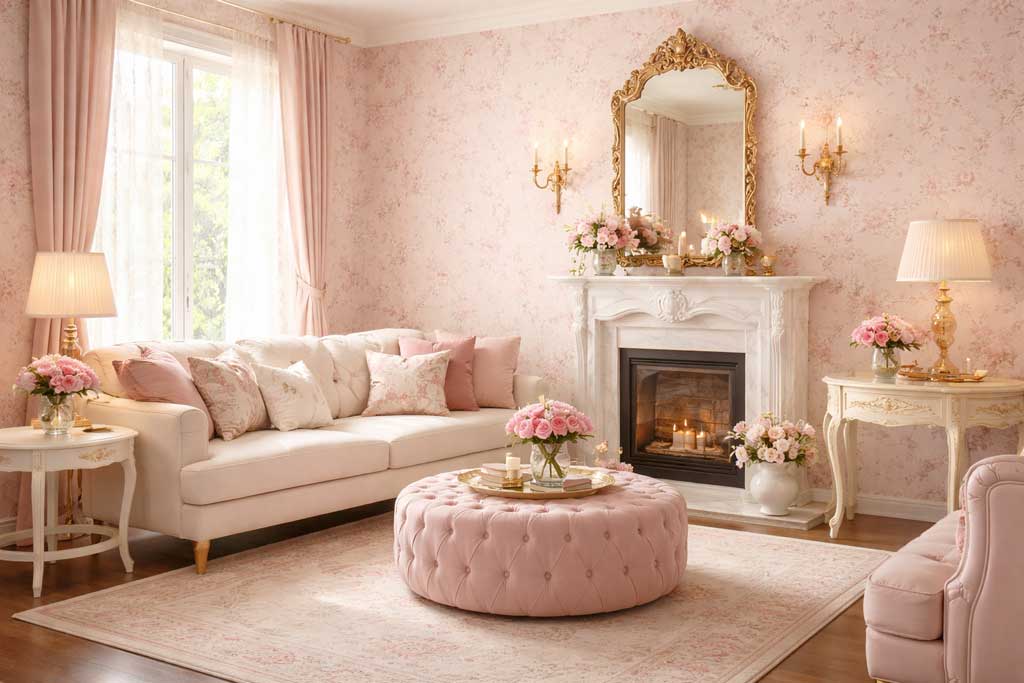
Wallpaper has always offered more than a splash of colour—it brings depth, texture and personality to a room. Pink wallpapers come in a vast range of designs, from delicate florals and watercolour washes to bold geometrics and metallic prints. A statement wall in dusky pink velvet-effect wallpaper adds instant sophistication, while pale pastel stripes can make a small hallway feel brighter and taller. Because pink pairs effortlessly with neutrals, it’s remarkably easy to coordinate with existing décor, giving homeowners the freedom to experiment without a full redesign.
A Colour That Ages Gracefully
What keeps pink relevant decade after decade is its ability to reinvent itself. In the mid-20th century, bubble-gum pink symbolised the optimism of post-war design. Later, dusty blush rose became the hallmark of understated luxury. More recently, shades like millennial pink and terracotta rose have reclaimed pink as a gender-neutral, sophisticated choice. Each reinvention brings a fresh aesthetic while maintaining the timeless essence of what makes pink appealing—its warmth and emotional connection to comfort and joy.
Perfect For Every Room
Unlike some bold colours that work best in specific spaces, pink has near-universal appeal. In bedrooms, a soft pink wallpaper promotes relaxation. In dining rooms, a muted rose enhances ambience and conversation. Bathrooms benefit from blush-toned prints that reflect warmth and light, while children’s rooms enjoy the versatility of gentle pastels that can grow with them. Even home offices gain a creative edge from warmer pink backdrops that inspire focus without feeling stark.
Why Pink Will Always Feel Right
At its heart, pink endures because it speaks to both nostalgia and innovation. It reminds us of softness and romance yet fits easily within modern design principles of balance and light. Whether used sparingly or as a statement, pink remains reassuringly timeless. For homeowners looking to refresh their interiors, investing in pink wallpaper is less about following a trend—and more about embracing a colour that continues to evolve with style itself.
Featured image credit: AI generated.